
A road trip to Upper Mustang is the best way to experience the Himalayas and its timeless culture without the physical exertion of trekking in a harsh landscape. Nestled in the trans-Himalayan regions of Nepal, Mustang is culturally and geographically Tibet, while it is politically in Nepal. Its isolation until 1992 from the rest of the world kept its rare Bon and Tibetan Buddhist traditions intact. Travelers can explore the serene Himalayan viewpoints, rugged terrains, ancient monasteries, and historical sites with opportunities to immerse themselves in the local Tibetan culture.
Whether you are a nature lover, a spiritual wanderer, or simply someone looking for a serene trip to Nepal Himalayas, a road trip to Upper Mustang, this post will guide you through the best route, its magical highlights, and the vibrant Tiji Festival. Let’s delve into the details of this amazing tour of Nepal.
A scenic journey to Upper Mustang
A road trip to Upper Mustang is the most scenic journey in the Himalayas with up-close views of the 8,000 m peaks and untouched Tibetan Buddhist cultural encounters. The route menders alongside the Kali Gandaki River, unveiling the scenic thrill of the Himalayan foothills, and then traverses the world’s deepest gorge, wedged between Annapurna I (8,091 m) and Dhaulagiri (8,167 m). The route then passes through the charming villages adorned with Tibetan Buddhist emblems, cliffside caves, and occult monasteries in the backdrop of spectacular snow peaks. With proper choices of accommodations and itinerary, a road trip to Upper Mustang becomes a remarkable adventure.
The Sacred Path Through Mustang
Travelling to Upper Mustang is also like exploring the medieval Tibet preserved in a time capsule. The region’s cultural heritage features the Bon tradition- the pre-Buddhist Tibetan religion- and early Tibetan Buddhism. Pilgrimages, ancient monasteries, and cave retreats dot the entire region, making it a sacred land since ancient times. There are more than 10,000 caves, of which many have been the residence of renowned masters, including Guru Rinpoche (Padmashambhava). Moreover, Muktinath, Damodar Kunda, and Ranchung Chungsi Cave are some of the ancient pilgrimages revered by Hindus, Bon, and Buddhists alike. Lo Gekar monastery – the first Tibetan Buddhist monastery, along with Chhode and Jampa Lhakhang, provides a close glimpse into age-old monastic life and rituals that continue with unbroken devotion. These sacred places are living museums of ancient rituals, manuscripts, and art that reflect a blend of animistic and shamanistic traditions with Buddhist philosophy.
Must-Visit Stops Along the Road
The journey to Upper Mustang itself is as exhilarating as the destination. As you traverse this magical Himalayan plateau, don’t miss out on these gems:
Naurikot Village: A traditional Thakali village perched on a 2,750 m ridge top with a centuries-old Bon monastery that serves as a quiet gateway to Mustang’s spiritual world. The village offers a brilliant view of Dhaulagiri (8,167 m), Dhaulagiri Icefall, Tukuche Peak, and Nilgiri Himal (7,061 m).
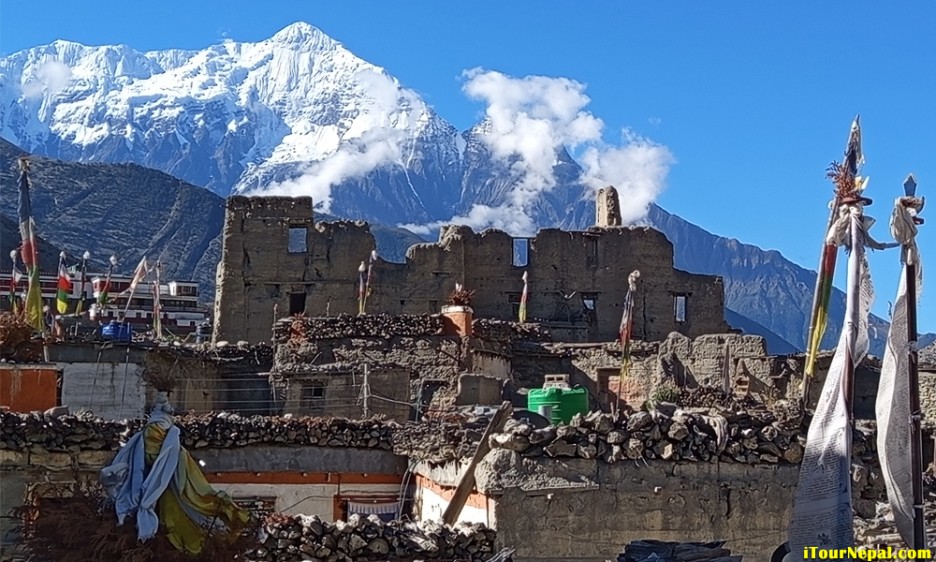
Kagbeni Village: Kagbeni is a picturesque village with traditional mud-brick houses and ancient monasteries in the backdrop of the Nilgiri Himal. Located in the juxtaposition of ancient salt trading routes, the village serves as a gateway to the Upper Mustang.
Chungsi Rachung Cave Monastery: Nestled in the dramatic landscape, this cave monastery is renowned as a meditation cave of Guru Rinpoche himself. The cave perched on a cliff has many self-arising figures of Bodhisattva and Tara.
Tsarang: The Former capital of the Lo Manthang is known for its fortress-monastery. The 8th-century monastery of Lo Gekar monastery is a short trip away. Tsarang embodies Mustang’s blend of spiritual and political history.
Lo Manthang: is the capital of Upper Mustang and a must-see earthen-walled city. About 150 households still live in the honeycomb structure inside the 8 m wall that surrounds the town. There are three monasteries with marvelous murals and artifacts dating back to the 15th century.
Luri Gompa: is one of the ancient cave monasteries that have intricate murals and artifacts dating back to the 13th century. It is believed to be one of the seven (or nine) cave monasteries housing a Stupa located in Upper Mustang, which is known as Kabum (collections of teachings).
The Tiji Festival: Mustang’s Spiritual Spectacle
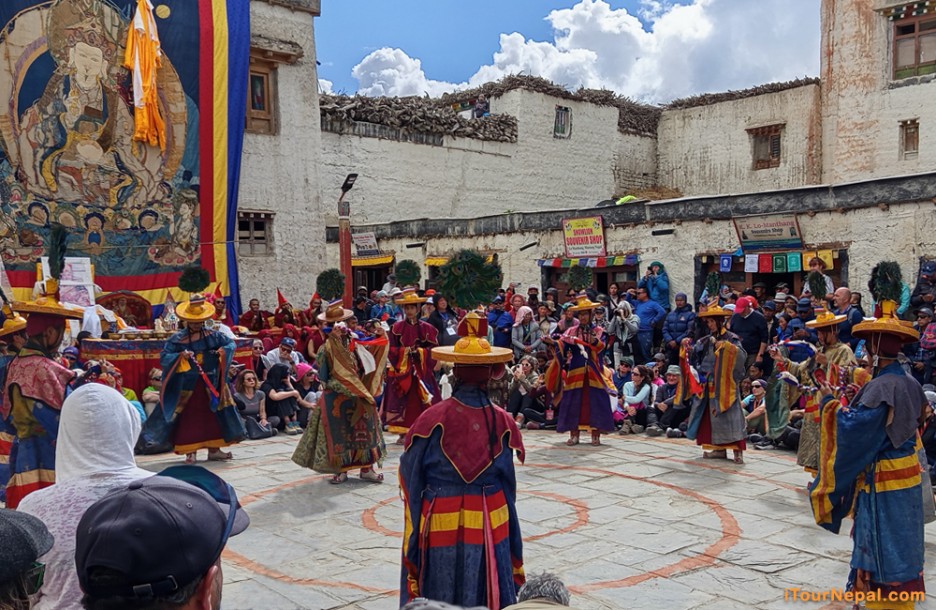
If you can travel in May, plan to be there for the Tiji festival, which is truly a once-in-a-lifetime experience. Monks from the Chode monastery enact the victory of good over evil based on the Tibetan Buddhist mythology. The three-day-long festival exhibits elaborate masked dances in the rhythm of hypnotic traditional music. The festival begins with solemn rituals and prayer ceremonies in the Chhode monastery. The monk who enacts the Buddha Dorje Jhunu had to go through fasting and meditation for three months before the event. The monk then enacts through dances the struggles of a deity, which reflects the deep-rooted beliefs and communal values of Mustang. The vibrant festival is not just a spiritual exhibition, but it is also an opportunity to foster renewal and purification of the participants.
Participating in the Tiji festival tour is not only about the spectacle, but it also presents Mustang’s warm hospitality and cultural tapestry.
Parting Thoughts
A journey to Upper Mustang is a fusion of spirituality and landscape that makes unique and long-lasting memories. The road trip shortens the week-long’ trekking, but it doesn’t make it less interesting. In fact, a driving tour allows you to explore remote destinations and viewpoints you would miss otherwise. As you navigate through the world’s deepest gorge, the stark beauty of the Himalayas unfolds, while the ancient monasteries and traditional villages provide a glimpse into medieval Tibet. From the mystic Cliffside monasteries to the enchanting Tiji Festival, Mustang’s cultural and natural beauty invites you to slow down, reflect, and celebrate timeless traditions.
If you’ve ever dreamed of exploring the heart of the Himalayas, rich with history and Tibetan culture, mark Mustang on your map and start planning a trip.